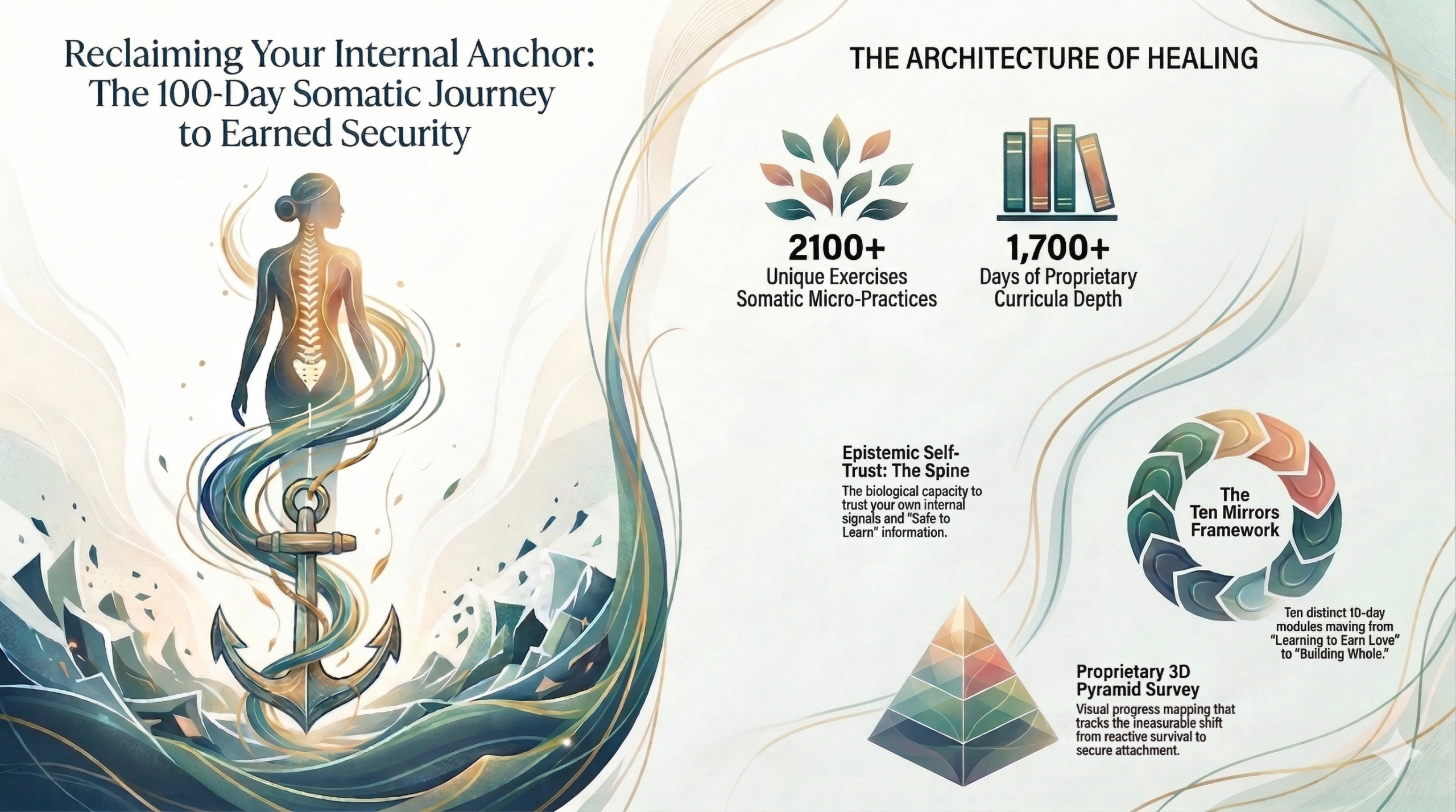
Mirror 1 in the iWillHeal framework asks a deceptively simple question: When did I first learn to earn love?
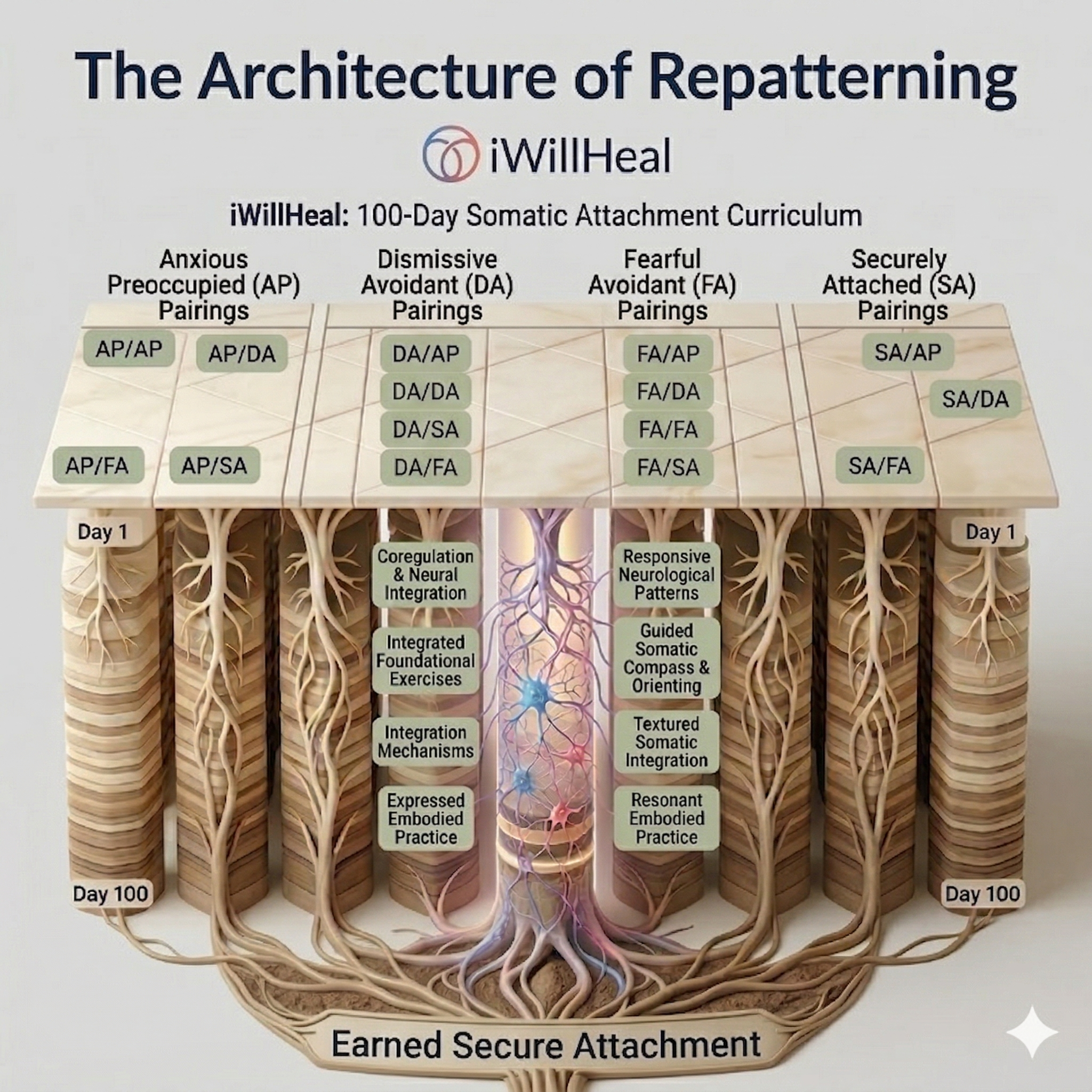
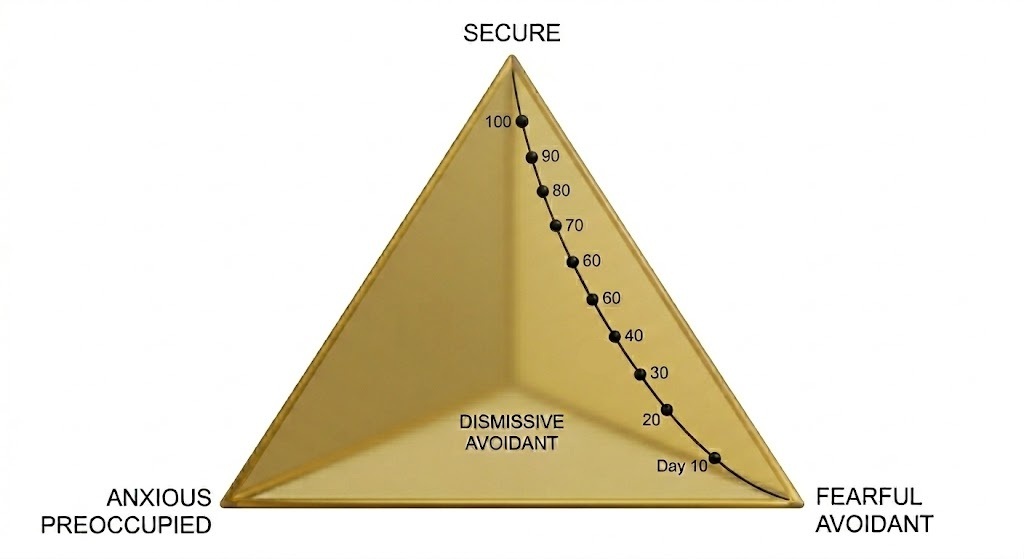
At its core, this mirror reveals the earliest moment your nervous system learned that love was not automatic, but conditional—something you had to secure through behavior, performance, or self-erasure. Every attachment style carries a different strategy for earning love, but the wound beneath them is the same: the belief that being yourself was not enough.
For the securely attached, earning love is often subtle and easy to miss. They may appear confident and relationally healthy, yet still carry a quiet pressure to be “good,” reasonable, or low-maintenance. In adult relationships, this can show up as over-functioning, emotional regulation for two people, or a reluctance to ask for more because “things are already good.” Mirror 1 invites the securely attached person to notice where gratitude has turned into self-silencing—and to remember that love does not need to be maintained through constant emotional maturity.
For the anxiously attached, earning love usually begins early and loudly. Love becomes something you secure through closeness, attentiveness, reassurance-seeking, and emotional availability. As a child, staying connected may have required vigilance—tracking moods, pleasing caregivers, or amplifying distress to stay seen. In adulthood, this becomes the belief that love must be actively held onto or it will disappear. Mirror 1 helps the anxiously attached person see that their worth is not proportional to how much they give, feel, or pursue.
For the dismissive avoidant, earning love often meant not needing it. Independence, competence, and emotional self-sufficiency became the currency of safety. As children, needing too much may have led to disappointment or rejection, so love was “earned” by staying small, capable, or invisible. In adult relationships, this can look like withholding vulnerability or equating closeness with loss of autonomy. Mirror 1 gently exposes the cost of this strategy: love that must be earned through distance is never fully received.
For the fearful avoidant, earning love is contradictory and exhausting. Love is pursued through intensity, emotional attunement, and hyper-connection—then protected against through withdrawal, testing, or shutdown. Early environments often taught them that love was both precious and dangerous. As adults, they earn love by oscillating between proximity and self-protection. Mirror 1 brings clarity to this push–pull, helping them see that love does not have to be won or survived.
Mirror 1 is not about blame. It is about awareness. When you see how you learned to earn love, you gain the power to stop performing for it—and begin receiving it instead.