Dismissive Avoidant Attachment: How to Recognize it in Yourself or in a Partner
Share This Page

Dismissive Avoidant attachment is one of the most misunderstood attachment patterns because it often masquerades as strength, independence, or emotional maturity. Many people with this style—and many who love them—don’t realize they’re dealing with an attachment strategy at all. They simply believe, “This is just how I am.”
Understanding the traits of a Dismissive Avoidant can bring immediate clarity.
At the core, a Dismissive Avoidant prioritizes autonomy over intimacy. Independence feels regulating.
Emotional closeness, especially when sustained or expected, feels destabilizing. This does not mean they do not want connection. It means connection activates an internal alarm that says, something is being asked of me that could cost me my freedom.
A common internal belief is that self-reliance equals strength. Depending on others—even emotionally—is often viewed as risky, unnecessary, or weak. Because of this, they may genuinely believe relationships should feel “easy” and that needing to work on emotional connection is a sign something is wrong.
When closeness increases, Dismissive Avoidants unconsciously deploy deactivating strategies—automatic behaviors designed to turn the attachment system down. These can include pulling away after intimacy, delaying replies, becoming suddenly busy, or feeling inexplicably irritated by small traits in their partner.
Minor flaws become magnified: how someone talks, eats, laughs, or expresses emotion can suddenly feel intolerable.
Many also experience the “phantom ex” phenomenon—idealizing a past partner, an unavailable person, or a hypothetical better match. This isn’t about love for the ex; it’s about using comparison to create emotional distance from the present relationship.
Cognitively, Dismissive Avoidants often have a negative attentional bias toward their partner. Care, warmth, and consistency may be minimized or dismissed, while annoyances are easily remembered. They may struggle with empathic accuracy, frequently misreading a partner’s distress as neediness, overreaction, or manipulation rather than a bid for connection.
Conflict is especially revealing. During disagreement, Dismissive Avoidants often feel an intense urge to escape—mentally, emotionally, or physically. They may shut down, stonewall, explode, or disengage entirely. This isn’t a lack of care; it’s because repair requires emotional engagement, which feels threatening to their nervous system.You’ll often hear early disclaimers such as “I need a lot of space,” “I’m not sure I want commitment,” or “I’m not good at relationships.” These statements function as emotional insulation—subtle warnings that limit expectations and reduce accountability.
One of the clearest diagnostic signals is what happens after distance. When a Dismissive Avoidant disengages, they typically feel relief and stabilization. Space restores calm. They are not ruminating or panicking; they are regulated again. This is a key distinction from other attachment styles.
If you see yourself here, this is not a character flaw. It is a learned survival strategy. And if you see your partner here, clarity matters more than hope or self-blame.
Awareness is the first step. Once the pattern is visible, real choice becomes possible.
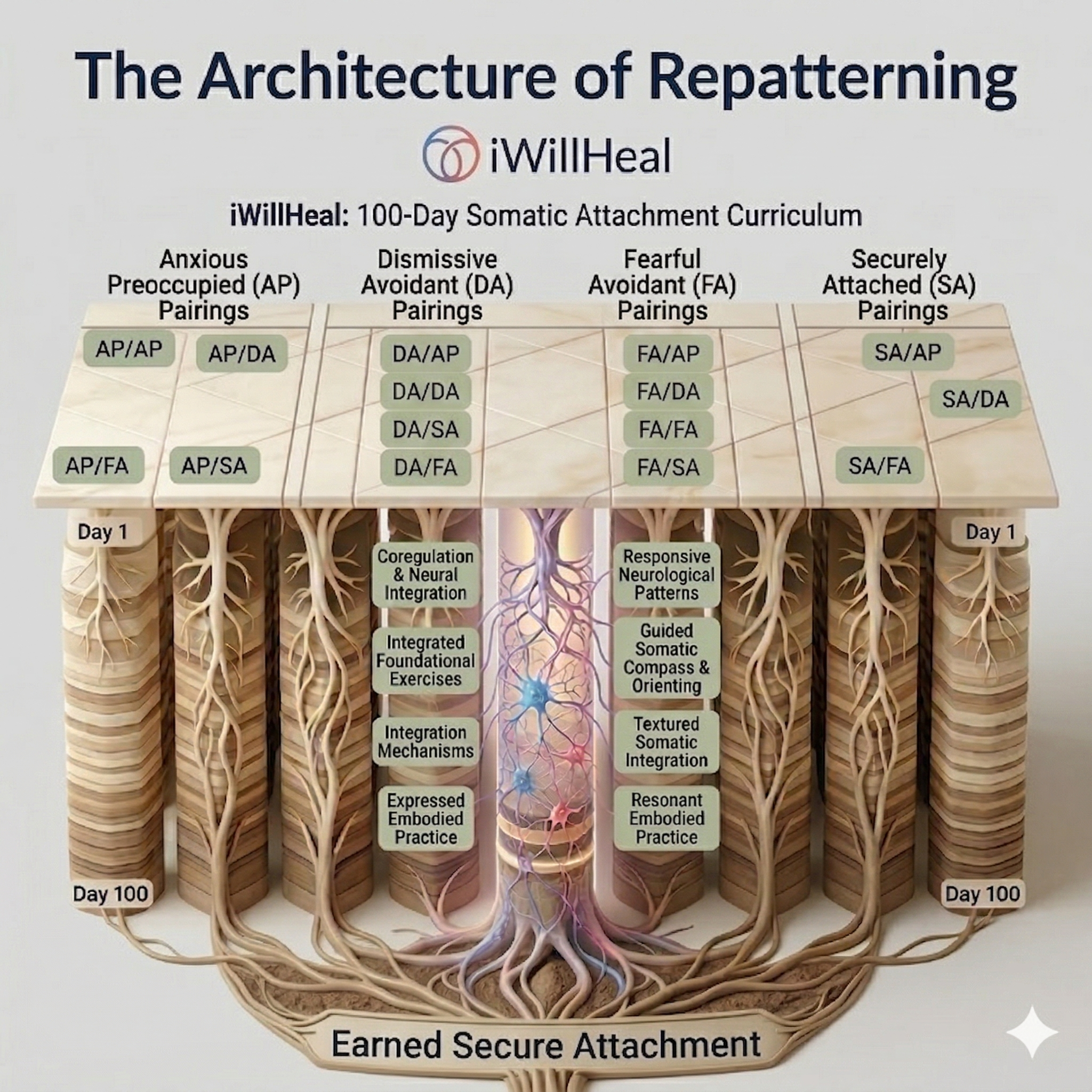
Links to our curriculum if YOU are Dismissive Avoidant and your Ex/Partner is: